
Hyperhidrosis Treatment in Worcester
At Arya Clinic in Lower Wick, Worcester, we help people explore their options when excessive sweating is affecting everyday life.
Understanding before treatment.
Thoughtful care. Honest guidance. Natural results.
Excessive Sweating Can Affect More Than You Might Expect
Sweating is a normal and important function of the body. It helps regulate temperature and can increase during exercise, warm weather, physical activity or certain emotional situations.
For some people, however, sweating can become excessive for the circumstances.
It may leave clothing visibly wet, make the palms difficult to keep dry or create a constant awareness of whether other people have noticed.
For someone experiencing hyperhidrosis, the issue isn’t necessarily simply the amount of sweat.
It can be the effect it has on everyday life.
You may find yourself:
- choosing clothes based on whether they show sweat
- changing clothes during the day
- avoiding particular colours or fabrics
- feeling uncomfortable shaking hands
- worrying about visible sweating at work
- keeping tissues or towels nearby
- avoiding activities because of sweating
- becoming self-conscious during social occasions
- thinking about whether other people will notice
If excessive sweating is affecting the way you live, work or interact with other people, it is reasonable to want to understand what options are available.
At Arya Clinic, the starting point is a consultation rather than a predetermined treatment.

Karl’s Perspective
“When someone comes to see me about excessive sweating, I want to understand what they’ve been experiencing and what they’ve already tried. It isn’t simply a question of whether we can treat the sweating. It’s about understanding whether treatment is appropriate and what approach makes sense for that individual. If they’ve not yet explored the usual options, I may suggest they do that first. If they’ve already tried those approaches without enough improvement, we can then discuss whether treatment at Arya may be appropriate. The consultation is about finding the right next step, rather than assuming the answer before we’ve had the conversation.”
— Karl Bhattacharyya BSc (Hons)
What Is Hyperhidrosis?
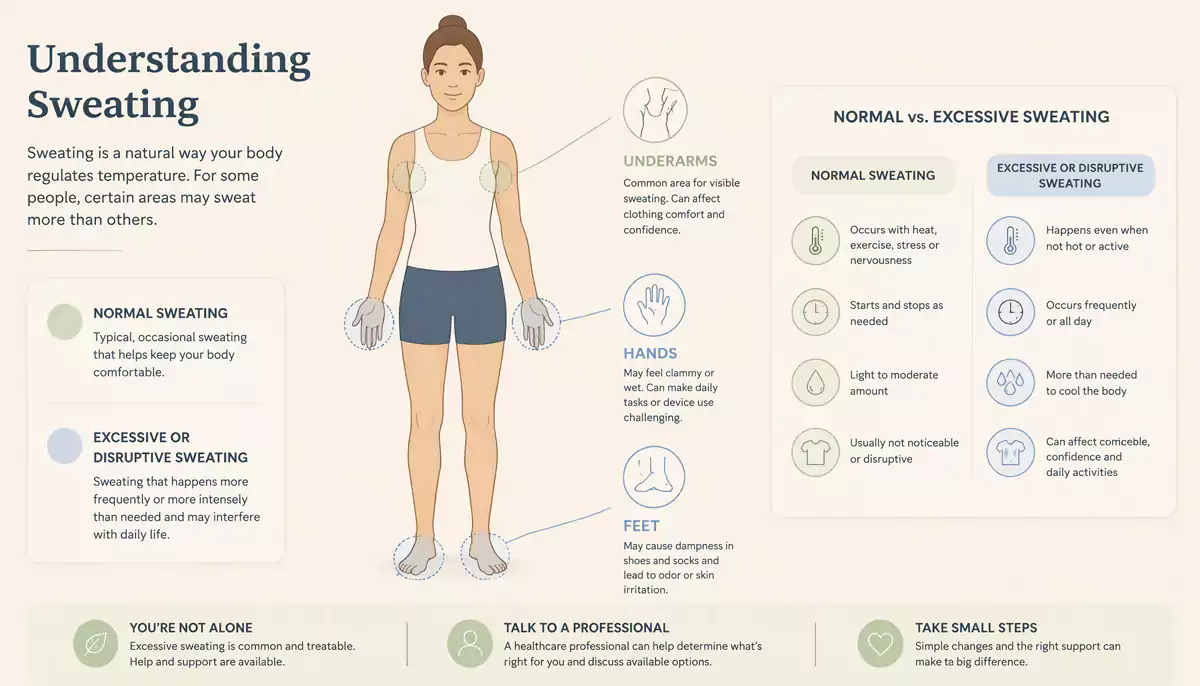
People with hyperhidrosis can experience sweating that is greater than would normally be expected for the circumstances. It can affect particular areas of the body rather than causing sweating everywhere.
Commonly affected areas include:
- underarms
- palms of the hands
- soles of the feet
- face
- scalp
However, the areas affected vary between individuals.
Hyperhidrosis treatment works by reducing sweat production in targeted areas, helping you stay dry and comfortable.
At Arya Clinic, Karl currently treats underarm sweating and excessive sweating affecting the palms of the hands.
There are also different types of hyperhidrosis, and understanding the pattern of sweating is an important part of deciding what should happen next.
The goal is simple — to help you feel more comfortable and confident day to day.
Discreet Sweat Reduction, Tailored to You
Excessive sweating can be difficult to talk about, but it’s far more common than many people realise. At Arya Clinic, we provide a supportive, discreet environment where you can discuss your concerns openly.
Our hyperhidrosis treatments are:
- For underarms and palms only
- Quick and minimally invasive
- Designed to fit around your lifestyle
- Suitable for both women and men
Located within Heatwave Worcester in Lower Wick, our clinic provides a discreet, welcoming space for clients seeking high-quality hyperhidrosis treatments. Clients travel from across Worcester and surrounding areas, including St John’s, Droitwich, and Malvern.
Primary and Secondary Hyperhidrosis
Understanding whether excessive sweating appears to be primary or secondary can be important when considering treatment.
Primary hyperhidrosis
Primary hyperhidrosis generally refers to excessive sweating where there is no obvious underlying medical condition causing it.
It often affects specific areas such as the underarms or palms and may have been present for a considerable period of time.
Some people first notice excessive sweating during childhood or adolescence, while others become more aware of it later.
A family history can also be relevant.
The important point is that the pattern and history need to be considered individually.
Secondary hyperhidrosis
Excessive sweating can sometimes occur as a result of another health condition or as a side effect of medication.
This is known as secondary hyperhidrosis.
It may have a different pattern from primary hyperhidrosis and can sometimes involve more widespread sweating.
This is one reason why Arya does not simply assume that someone enquiring about excessive sweating should proceed directly to treatment.
If the history suggests that medical assessment is appropriate, that should happen before treatment is considered.
The NHS advises speaking to a GP where excessive sweating is persistent, interferes with everyday activities, occurs at night, or may be associated with medication or another health issue.
What Can Excessive Sweating Feel Like?
Hyperhidrosis can be difficult to describe because the experience is different for everyone.
Someone with underarm sweating may notice:
- visibly damp clothing
- sweat marks appearing quickly
- needing to change clothing
- concern about particular colours or materials
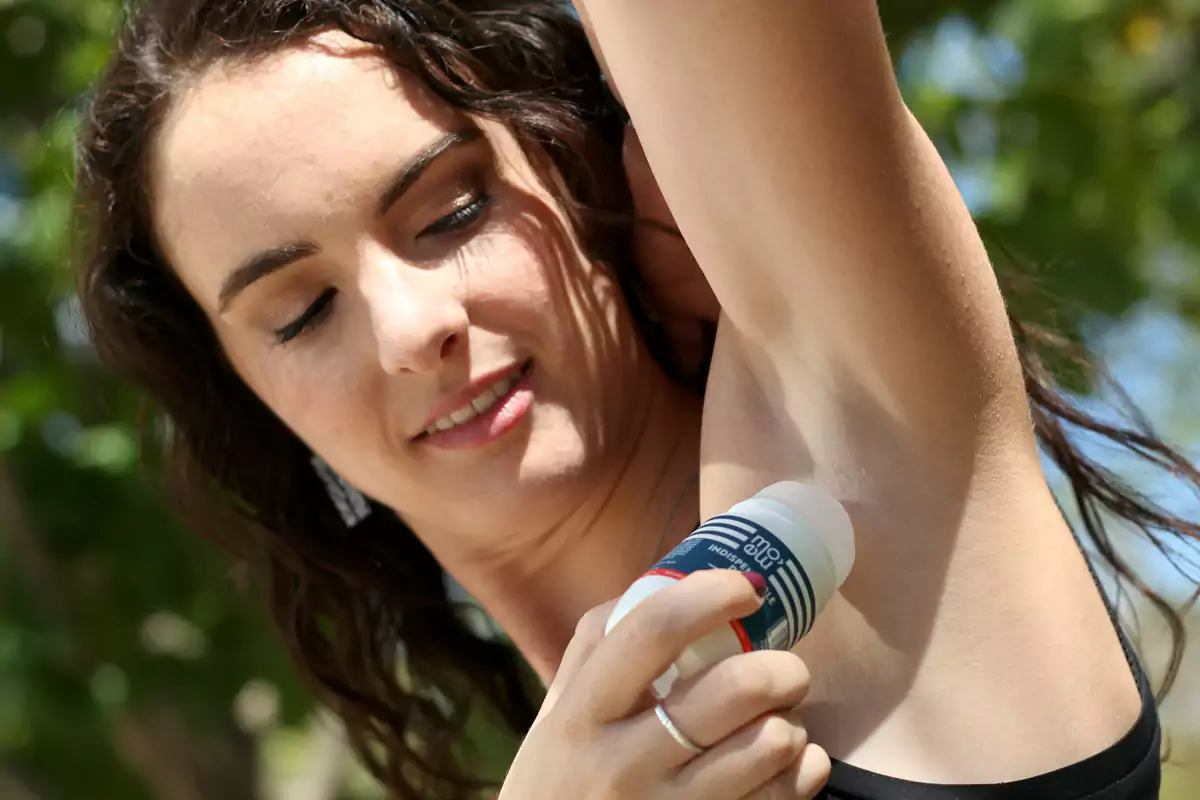
- repeated use of antiperspirants
- awareness of sweating throughout the working day
Someone with palmar sweating may notice:
- consistently damp hands
- difficulty keeping hands dry
- discomfort when shaking hands
- difficulty handling paper or certain objects
- concern about touching other people’s hands
- increased awareness of sweating during social situations
The practical effects can sometimes become more frustrating than the sweating itself.
You may begin planning around the possibility of sweating without even realising how much of your day it occupies.
Why Do People Seek Help for Hyperhidrosis?
There is no single reason why someone decides to seek professional advice. For some people, it is primarily practical.
For others, it is the effect that sweating has on confidence or social interaction.
Clothing
Excessive underarm sweating can make choosing clothes more complicated.
Some people avoid certain colours, materials or styles because they are concerned about visible sweat.
Work
Sweating can become particularly noticeable in professional situations.
Someone may worry about visible marks on clothing, shaking hands, handling paperwork or simply whether colleagues have noticed.
Social situations
Palmar sweating can be particularly frustrating when meeting people, shaking hands or interacting closely with others.
Confidence
The concern isn’t necessarily:
“I’m sweating.”
It can become:
“Can everyone else see that I’m sweating?”
That constant awareness can be tiring.
If this sounds familiar, you’re certainly not alone in wanting to find out what options are available
Is Hyperhidrosis a Medical Condition?
Hyperhidrosis is a recognised condition involving excessive sweating. However, not every episode of heavy sweating means someone has hyperhidrosis.
Sweating naturally increases in response to heat, exercise and other circumstances. The pattern, frequency and impact of sweating are therefore important.
A person who occasionally sweats heavily after exercise is experiencing a normal physiological response.
Someone who experiences excessive sweating regularly, without the circumstances appearing to explain the amount of sweating, may have a different issue that warrants further consideration.
This distinction is one reason why consultation and medical history are important.
What Can Cause Excessive Sweating?
There are many reasons why someone may sweat more than usual.
These can include normal responses to:
- heat
- exercise
- physical activity
- emotional situations
- nervousness or stress
Excessive sweating can also sometimes be associated with medication or another health condition.
Because of this, it isn’t appropriate to assume from an online description alone what is causing someone’s sweating.
If sweating is new, has changed significantly, occurs at night, is widespread or is accompanied by other unexplained symptoms, medical assessment may be appropriate.
Can Stress or Anxiety Cause Sweating?
Yes, emotional situations can increase sweating.
Feeling nervous, stressed or anxious can trigger sweating, particularly around areas such as the palms and underarms.
However, this does not necessarily mean that excessive sweating is simply caused by anxiety.
Some people with hyperhidrosis find that emotional situations make their sweating more noticeable, while the underlying problem exists independently of those situations.
If you’re unsure what is causing your sweating, the best approach is not to try to diagnose yourself.
A consultation can help establish what you have experienced and whether further medical assessment would be appropriate.
When Should Excessive Sweating Be Medically Assessed?
Excessive sweating is not always something that requires specialist treatment. There are circumstances where speaking to a GP is the more appropriate first step.
Medical assessment is particularly worth considering if:
- your sweating is new
- your sweating has changed significantly
- you experience night sweats
- sweating occurs across much of your body
- you have other unexplained symptoms
- you take medication that may contribute to sweating
- sweating is significantly interfering with everyday activities
- measures you have tried have not helped
The NHS also recommends speaking to a GP in circumstances such as persistent excessive sweating, night sweats, sweating that interferes with daily activities, or where medication may be involved.
Arya’s role is not to diagnose the underlying cause of unexplained sweating online.
Where medical assessment is appropriate, that should come first.
What Can You Try Before Specialist Treatment?
There are several approaches that people may explore before considering specialist treatment.
Depending on the circumstances, these can include:
- stronger antiperspirants
- products specifically designed for excessive sweating
- practical measures to manage sweat
- prescription antiperspirants where appropriate
- iontophoresis
- medication prescribed to reduce sweating
- specialist dermatology assessment
The NHS notes that pharmacists can advise on excessive sweating and may recommend stronger antiperspirants and other practical measures. For people whose sweating remains troublesome, further treatments may be considered depending on the circumstances.
Karl specifically asks about what you have already tried.
If you haven’t yet explored appropriate first-line options, he may recommend starting there.
If you’ve already tried those approaches without enough improvement, the conversation can then move towards whether further treatment may be appropriate.
What Treatments Are Available for Hyperhidrosis?
There isn’t one treatment that is right for everybody.
Depending on the type, location and severity of excessive sweating, treatment discussions can include:
Antiperspirants
Stronger antiperspirants are often an initial option for excessive sweating.
These are different from ordinary deodorants because their purpose is to reduce sweating rather than simply address odour.
Prescription antiperspirants
For some people, a stronger prescription option may be considered.
This is something that should be discussed with an appropriate healthcare professional.
Iontophoresis
Iontophoresis uses a mild electrical current through water or a wet pad and can be used for certain areas of excessive sweating.
It is particularly associated with treatment of the hands and feet.
Medication
Some medicines can reduce sweating.
These require appropriate medical assessment and prescribing.
Specialist treatment
If excessive sweating is severe or persistent and other approaches have not helped, a GP may refer someone to a specialist such as a dermatologist.
Injectable treatment
Injectable treatment may be considered in certain circumstances following appropriate assessment and prescribing.
This is the treatment pathway that may be discussed at Arya for suitable clients with underarm or palmar sweating.
The important point is that the treatment is considered after consultation and medical assessment, rather than being something you need to select before you arrive.
What Does Arya Clinic Treat?
Karl currently treats excessive sweating affecting two areas:
Underarm sweating
Underarm sweating is the most common hyperhidrosis concern Karl sees at Arya.
If you experience persistent or excessive sweating from the underarms and other approaches have not provided enough improvement, this can be discussed during consultation.
The treatment area can be assessed and, where appropriate, Karl can use the Minor’s test to help map the distribution of sweating before treatment.
Palmar sweating
Karl also treats excessive sweating affecting the palms of the hands.
Palmar sweating can be particularly frustrating because the hands are involved in so many everyday interactions.
People may notice damp palms when:
- shaking hands
- handling paperwork
- using phones or devices
- holding objects
- meeting other people
- working with their hands
Whether treatment is appropriate depends on your individual circumstances and medical assessment.
Karl’s Approach to Hyperhidrosis
Karl’s approach is based on assessment rather than simply providing the treatment someone has searched for.
During consultation, he wants to understand:
- how long you’ve experienced excessive sweating
- where the sweating occurs
- how frequently it happens
- how it affects everyday life
- whether there are particular triggers
- what you’ve already tried
- whether you’ve sought medical advice
- whether previous approaches have helped
- what you would like to achieve
His background in BSc (Hons) Sports Therapy, advanced Oxford University training and work as a Facial Aesthetics & Wellness Practitioner contribute to an approach based around assessment and individual circumstances.
Karl’s Perspective
“One of the things I find important with hyperhidrosis is that people can sometimes arrive having already decided exactly what they need. That’s understandable. They’ve probably spent a lot of time researching online and may have lived with the problem for years. But I still want to understand their history, what they’ve tried and how the sweating is affecting them.
If there is a better option to explore first, I’ll explain that. If treatment is appropriate, we’ll discuss that too. The aim is to make a good decision based on the person in front of me, rather than simply following a standard pathway.”
— Karl Bhattacharyya BSc (Hons)
What Have You Tried Already?
This is one of the first questions Karl asks. “What have you tried?”
You may already have tried:
- ordinary antiperspirants
- stronger antiperspirants
- prescription products
- changing clothing
- changing your routine
- practical measures to manage sweating
- other treatments
Knowing what has and hasn’t helped is useful when deciding what to discuss next.
If you haven’t tried anything specifically aimed at excessive sweating, don’t worry. A consultation can still be useful.
Karl may simply recommend an appropriate first step rather than moving straight to specialist treatment.
If you’ve already tried several approaches and continue to experience significant sweating, your options can be discussed in more detail.
The Arya Hyperhidrosis Consultation
The consultation is designed to give you a clear understanding of your options.
1. Tell us what you’ve been experiencing
We’ll discuss when the sweating started, where it occurs and how it affects your everyday life.
2. Explain what you’ve already tried
Karl will want to understand which approaches you’ve explored and how successful they have been.
3. Discuss your goals
You’ll have the opportunity to explain what you’d like to improve.
For some people, that’s simply wanting to wear particular clothes without worrying about visible sweat.
For others, it may be being more comfortable shaking hands or interacting with people.
4. Consider suitability
Your history and circumstances are considered alongside the relevant medical assessment and prescribing process.
5. Explore your options
If treatment appears appropriate, the proposed approach can be explained.
If another option would be more appropriate, that will be discussed too.
6. Decide what you want to do
You’ll have the information you need to make an informed decision.
There is no need to arrive knowing exactly what treatment you want.
How Is the Sweating Area Assessed?
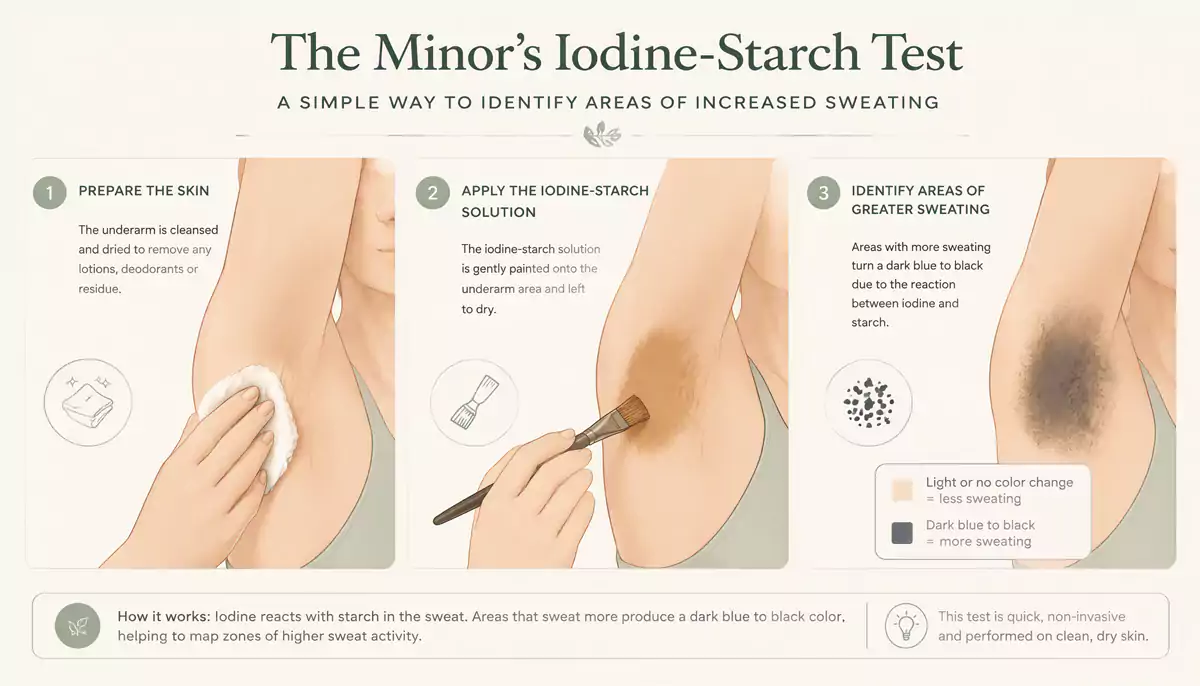
Where appropriate, Karl uses Minor’s test to help identify areas where sweating is most active.
Minor’s test uses an iodine-and-starch reaction.
When sweat is produced in the treated area, the reaction can make areas of increased sweating more visible.
This can help Karl understand the distribution of sweating and plan the treatment area more precisely.
It is particularly useful when determining the areas that require attention rather than relying solely on where someone thinks they sweat most.
A consultation can help establish what you have experienced and whether further medical assessment would be appropriate.
What Happens Before Treatment?
Where injectable treatment is being considered, the process involves appropriate medical assessment and prescribing arrangements.
Karl reviews the relevant information and the clinic’s medical prescriber considers the medical history and proposed treatment.
Treatment can only proceed where the appropriate healthcare professional is satisfied that it is medically appropriate and the necessary consent process has been completed.
This is an important part of Arya’s consultation-led approach.
The aim is for you to understand the treatment before deciding whether to proceed.
What Does Hyperhidrosis Treatment Feel Like?
Everyone’s experience is different.
Karl uses an ice pad to cool the treatment area beforehand, and the injections are superficial.
Clients Karl has treated have generally described the appointment as comfortable, although some temporary discomfort can occur. You may experience:
- brief injection sensations
- temporary tenderness
- mild soreness
- sensitivity in the treated area
Karl will explain what to expect before treatment and provide relevant aftercare information afterwards.
What Are the Small Raised Areas After Treatment?
Small raised areas can sometimes be visible at the injection points immediately following treatment.
These are sometimes called blebs.
They occur because the treatment is delivered superficially into the skin.
The appearance is temporary and Karl explains this before treatment so that you know what to expect when you leave the clinic.
You will also receive aftercare information explaining what to expect following your appointment.
What Happens After Treatment?
Aftercare is part of the treatment process.
Arya provides treatment-specific aftercare information and Karl reiterates the important points following your appointment.
If you have questions afterwards, you can contact the clinic as instructed.
The aim is to make sure you know what to expect rather than simply leaving the clinic without guidance.
When Might You Notice a Difference?
One of the questions Karl is commonly asked is:
“How quickly will it work?”
Based on Karl’s experience with clients he has treated, people commonly begin to notice a reduction in sweating after around five days.
Karl generally advises allowing up to approximately 14 days for the full effect to develop.
Individual responses vary, so these timeframes should be regarded as a guide rather than a guarantee.
If you have concerns about your response following treatment, you can contact Arya to discuss them.
How Long Might the Improvement Last?
Another common question is:
“How long will it last?”
Karl generally discusses around six months as a guide based on his experience with clients he has treated.
Individual experiences vary, and duration should not be regarded as a guaranteed timeframe.
If the effect reduces over time and excessive sweating becomes a concern again, your options can be discussed as part of a future consultation.
Will I Sweat More Somewhere Else?
This is a question Karl hears regularly.
People sometimes worry that reducing sweating in one area means the body will automatically compensate by producing more sweat elsewhere. It is important not to assume that this will happen.
Sweating patterns and individual responses vary, and the experience following treatment is not identical for everyone. If this is a particular concern for you, raise it during consultation.
Karl can explain the relevant considerations in the context of the treatment being discussed.
What If the Treatment Doesn’t Work as Expected?
No treatment should be presented as producing an identical response in every person. Karl generally advises allowing up to approximately 14 days for the full effect to develop.
If you feel that the response isn’t what you expected, contact Arya so that your concerns can be discussed. Where appropriate, a follow-up can be considered.
Ongoing communication and aftercare form part of the overall treatment experience..

Who May Be Suitable for Treatment?
Suitability cannot be determined from a simple checklist.
Treatment may be considered where someone:
- has a clear history of excessive sweating
- has explored appropriate options already
- continues to experience a significant concern
- has realistic expectations
- has an appropriate treatment area
- has no relevant reason why treatment should not proceed
The medical history and individual circumstances are important.
Treatment is only considered following the appropriate consultation, medical assessment and prescribing process.
When Might Treatment Not Be Appropriate?
There are circumstances where treatment may not be appropriate.
Relevant considerations can include medical history, pregnancy, neuromuscular conditions, infection affecting the proposed treatment area and other factors identified during medical assessment.
The full circumstances are considered as part of the consultation and prescribing process.
Treatment may also not be the best next step where someone has not yet explored appropriate alternatives.
That isn’t a negative outcome.
Sometimes the most useful thing a consultation can do is establish what should happen next.
Is Hyperhidrosis Treatment Right for You?
Treatment may be worth exploring if excessive sweating is having a meaningful effect on your everyday life and you have already considered appropriate alternatives.
You may be particularly interested in discussing treatment if you experience excessive sweating affecting:
- your underarms
- your palms
You don’t need to have diagnosed yourself with hyperhidrosis.
You don’t need to know which treatment you need.
And you don’t need to be certain that treatment is the answer.
That’s exactly what the consultation is for.
What If You Have Never Had Aesthetic or Injectable Treatment Before?
That’s completely fine.
Many people who enquire about hyperhidrosis treatment have never had an injectable treatment before.
The consultation gives you an opportunity to ask questions and understand what is involved.
Karl will explain the proposed approach, what you may experience during and after treatment, relevant considerations and the expected treatment pathway.
You can then decide whether you’d like to proceed.
What If You Aren’t Sure Whether Your Sweating Is Hyperhidrosis?
You don’t need to diagnose yourself before contacting Arya.
Simply explain what you’ve been experiencing.
Karl can discuss your history and, where appropriate, recommend that you seek medical assessment before any treatment is considered.
If you have already spoken to your GP or another healthcare professional, it is useful to bring that information to your consultation.
Can Hyperhidrosis Be Treated Permanently?
Treatment may be worth exploring if There isn’t a simple answer to this.
Different approaches to excessive sweating have different effects and durations.
Where treatment is effective, the improvement may reduce over time and further treatment may be considered if appropriate.
It is therefore better to think of treatment as a way of managing excessive sweating rather than expecting a guaranteed permanent solution.
Your consultation is an opportunity to discuss what can realistically be expected from the treatment being considered.
Can Hyperhidrosis Get Worse With Age?
There isn’t one pattern that applies to everyone.
Some people experience excessive sweating for many years, while others notice changes over time.
If your sweating has recently changed or become significantly worse, it is worth considering whether medical assessment is appropriate rather than assuming that the change is simply part of getting older.
What If My Sweating Is Affecting My Confidence?
This is one of the reasons people seek help.
The physical symptom may be sweating, but the practical impact can include constantly thinking about clothing, avoiding handshakes, worrying about work situations or feeling uncomfortable socially.
You don’t need to feel embarrassed discussing this.
Hyperhidrosis is a genuine concern and the consultation is intended to provide a straightforward, professional environment in which to discuss it.
Is Treatment Painful?
Everyone experiences injections differently.
Karl uses an ice pad to cool the area beforehand and the injections are superficial.
Clients he has treated have generally described the treatment as comfortable, although temporary discomfort, soreness or sensitivity can occur.
The experience can also vary according to the area being treated.
Do I Receive Aftercare?
Yes.
Treatment-specific aftercare information is provided as part of the treatment process.
Karl also reiterates the important points following your appointment.
If you have questions or concerns afterwards, you can contact Arya as instructed.
What Does Karl Find Most Rewarding About Treating Hyperhidrosis?
For Karl, one of the most rewarding parts of treating excessive sweating is the practical difference it can make to someone’s everyday experience.
Some people have spent years thinking about whether other people can see them sweating.
They may have changed the clothes they wear, avoided certain situations or become uncomfortable with something as simple as shaking hands.
Karl particularly values hearing about the difference that reduced sweating can make to confidence and everyday wellbeing.
It is one of the reasons he takes the consultation and treatment-planning process seriously.
A Common Misunderstanding About Hyperhidrosis
Karl finds that many people who live with excessive sweating understand their own symptoms very well.
What they sometimes don’t know is what options are available. Someone may have spent years buying different antiperspirants without realising that other approaches exist. Someone else may have spoken to their GP but not explored specialist options.
Others may simply have assumed that excessive sweating is something they have to live with.
The purpose of a consultation is partly to change that.
Understanding your options is the first step towards deciding what to do about them.
Why Choose Arya Clinic for Hyperhidrosis in Worcester?
Hyperhidrosis can be an awkward subject to discuss.
Arya aims to make the process straightforward, professional and approachable.
✔ Consultation-led: We start by understanding what you have experienced before discussing treatment
✔ Personalised: Karl considers your history, what you’ve tried and what you want to achieve.
✔ Focused treatment: Karl currently treats excessive sweating affecting the underarms and palms of the hands.
✔ Medical oversight: Where prescription treatment is being considered, the relevant medical information is assessed through the clinic’s prescribing process.
✔ Targeted assessment: Where appropriate, Karl uses Minor’s test to help identify areas of increased sweating activity.
✔ Clear expectations: You’ll be given an explanation of what the treatment involves, what you may notice afterwards and the expected timeframe.
✔ Ongoing support: Aftercare information is provided and you can contact Arya if you have questions following treatment.
✔ Honest recommendations: If another option is more appropriate, Karl will tell you.
The objective isn’t simply to provide treatment.
It is to help you find the most appropriate next step.
Excessive Sweating Doesn’t Have to Dictate Your Choices
If sweating is affecting what you wear, how you work, how you interact with people or how confident you feel, it is understandable to want to explore your options.
You don’t need to arrive with a treatment already chosen.
You don’t need to know exactly why you’re sweating.
And you don’t need to work everything out before contacting us.
Start with a conversation.
Understand what’s happening.
Explore your options.
Then decide what feels right for you.

Hyperhidrosis Treatment for Men
Excessive sweating can affect men just as much as women, particularly in professional or social settings. Hyperhidrosis treatment is a popular option for men seeking a reliable, discreet solution to underarm sweating.
Treatments are tailored to suit male physiology and lifestyle.
Feel Confident, Every Day
Addressing this issue helps you feel comfortable and confident in your skin. Whether at work, social events, or daily life, targeted sweat reduction allows you to focus on what matters — not worrying about excessive sweating. The discreet, tailored approach ensures natural results that fit seamlessly into your lifestyle.
Frequently Asked Questions About Hyperhidrosis Treatment
Hyperhidrosis is the term used to describe excessive sweating.
It can affect specific areas such as the underarms or palms, or in some cases other parts of the body.
No. Normal sweating is an important bodily function and increases with factors such as heat and exercise.
Hyperhidrosis refers to sweating that is excessive for the circumstances and can interfere with everyday life.
Hyperhidrosis can affect areas including the underarms, palms, feet, face and scalp.
At Arya Clinic, Karl currently treats underarm and palmar sweating.
No. You don’t need to diagnose yourself.
Simply explain what you’ve been experiencing.
If your history suggests that medical assessment is appropriate, this can be discussed before treatment is considered.
Not necessarily in every circumstance.
However, medical assessment is particularly important if sweating is new, has changed significantly, occurs at night, is widespread, is accompanied by other unexplained symptoms or may be associated with medication.
The NHS recommends speaking to a GP in several of these circumstances.
Tell us what you have tried.
Karl will want to understand which products or approaches you’ve already explored and how effective they have been.
If appropriate options have already been tried without enough improvement, further treatment can be discussed.
That’s fine. Karl may recommend that you explore appropriate first-line options before considering specialist treatment.
A consultation can still be useful because you’ll have a clearer understanding of what may be worth trying.
Yes. Underarm sweating is the most common hyperhidrosis concern Karl sees at Arya.
Treatment is considered following consultation and appropriate medical prescribing assessment.
Yes. Karl also treats excessive sweating affecting the palms of the hands.
Suitability depends on your individual circumstances and the outcome of consultation and medical assessment.
No. Karl currently focuses on underarm and palmar sweating.
If you experience excessive sweating affecting another area, a GP or appropriate specialist may be able to advise you about the most suitable treatment options.
Where appropriate, Karl uses Minor’s test, an iodine-and-starch test that can make areas of increased sweating more visible.
This can help map the treatment area.
Based on Karl’s experience, clients commonly begin to notice a reduction in sweating after around five days.
He generally advises allowing up to approximately 14 days for the full effect.
Individual responses vary.
Karl generally discusses around six months as a guide based on his experience.
Individual duration varies and this should not be regarded as a guarantee.
It should not be assumed that reducing sweating in one area will automatically result in increased sweating elsewhere.
If this is a concern, discuss it during consultation so the relevant considerations can be explained.
Not necessarily. Stress and emotional situations can increase sweating, but excessive sweating can also occur independently of those situations.
If you’re unsure about the cause, medical assessment may be appropriate.
Some medicines can contribute to sweating.
If you think medication may be involved, discuss this with your GP or prescribing healthcare professional rather than stopping medication yourself.
There is no universal permanent solution.
Different treatments have different effects and durations.
Where treatment is effective, the improvement may reduce over time and further treatment may be considered where appropriate.
Some temporary discomfort can occur during injectable treatment. Karl uses an ice pad to cool the area beforehand, and the treatment approach will be explained before treatment. Temporary soreness or sensitivity may also occur afterwards.
Small raised areas or blebs may be visible at injection points.
The treated area may also feel temporarily sore or sensitive.
Karl explains what to expect before treatment and provides appropriate aftercare afterwards.
Yes. Arya provides treatment-specific aftercare information and Karl reiterates the important points following treatment.
You can contact the clinic if you have questions or concerns afterwards.
Karl will explain the reason.
It may be that another approach should be tried first, medical assessment is required, or the proposed treatment isn’t appropriate for your circumstances.
The consultation is still useful because it helps establish the appropriate next step.
Your Hyperhidrosis Consultation in Worcester
You don’t need to know exactly what treatment you want before booking.
Your consultation gives you the opportunity to:
1. Explain what you’ve been experiencing
Tell Karl where you sweat, how often it happens and how it affects you.
2. Discuss what you’ve tried
Explain what you’ve already done and whether it helped.
3. Talk about your goals
Tell us what you’d like to change about your everyday experience.
4. Explore your options
Discuss whether treatment may be appropriate and whether other approaches are worth considering.
5. Understand the proposed treatment
If treatment is appropriate, you’ll be given information about what is involved, what you may notice afterwards and the relevant aftercare.
6. Decide when you’re ready
You can then decide whether you want to proceed.
You don’t need to know the answer before you arrive.
That’s what the consultation is for..
Hyperhidrosis Treatment in Worcester: The Arya Approach
We believe good treatment starts with a good conversation.
Understand your experience.
Consider your options.
Choose an approach that is appropriate for you.
Then decide what you want to do.
Arya Clinic is based within Heatwave Tanning Salon in Lower Wick, Worcester, and welcomes clients from Worcester and surrounding areas including St John’s, Lower Wick, Battenhall, Warndon, Droitwich Spa, Malvern and nearby Worcestershire communities.
If excessive sweating is affecting your everyday life, we’d be happy to discuss your circumstances.
Meet Karl Bhattacharyya BSc (Hons) – Founder of Arya Clinic
Karl Bhattacharyya is a facial aesthetics and wellness practitioner with a BSc (Hons) in Sports Therapy and advanced training at Oxford University. A former world bodybuilding champion and experienced sports therapist, he combines science, skill, and precision to deliver natural, personalised results.
- World Bodybuilding Champion
- BSc (Hons) Sports Therapy
- Oxford University Advanced Training
- Facial Aesthetics & Wellness Practitioner





Book Your Hyperhidrosis Consultation in Worcester
If excessive sweating is affecting your everyday life and you’d like to understand what options may be available, you can arrange a consultation at Arya Clinic.
We’ll take time to understand what you’ve experienced, what you’ve already tried and whether further treatment may be appropriate.
You don’t need to know exactly which treatment you need.
Start with a conversation.
Arya Clinic c/o Heatwave Tanning Salon, Lower Wick, Worcester
Explore More From Arya Clinic
Consultation-Led Aesthetic & Wellness Care
Learn more about Arya’s approach to consultation, assessment and personalised treatment planning.
About Karl Bhattacharyya
Discover Karl’s Sports Therapy background, training and approach to aesthetic and wellness treatment.
Aesthetic & Wellness Treatments in Worcester
Explore the treatments and consultations available at Arya Clinic.
Contact Arya Clinic
Find Arya Clinic within Heatwave Tanning Salon in Lower Wick, Worcester, and learn how to get in touch.